South Khorasan officials announced a package of subsidised agricultural finance in 2020 that included lower-cost credit for saffron growers in border areas. The announcement also described greenhouse lending and a national saffron plan intended to link finance with product quality.
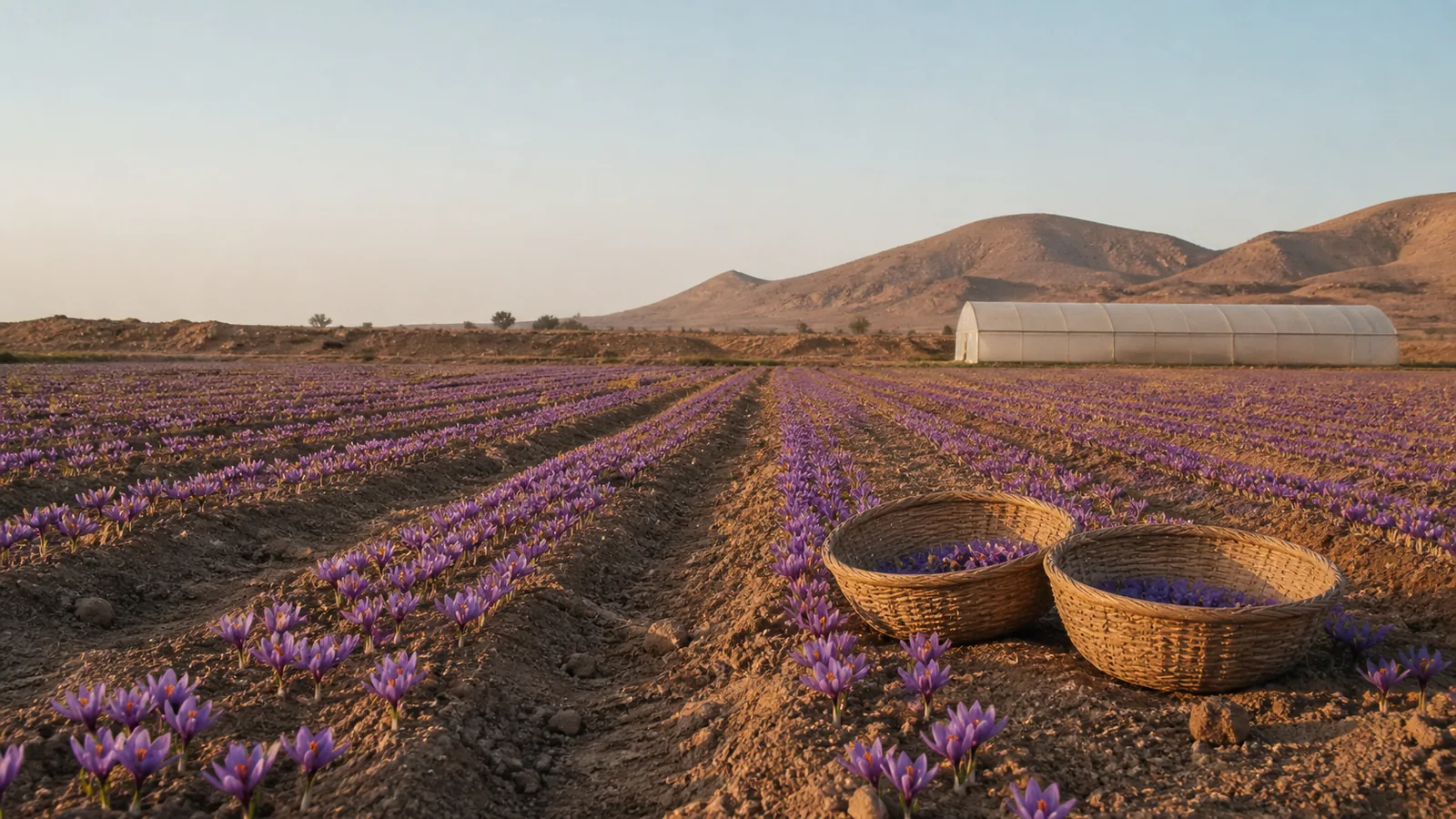
These amounts, rates and registration conditions belong to that announcement. They are historical programme details, not current loan terms; growers considering finance today should confirm eligibility directly with the responsible provincial authority and bank.
Credit proposed for saffron growers
Hadi Bijari, then identified as deputy for planning and economic affairs at the South Khorasan Agricultural Jihad Organization, said saffron farmers could receive 11 million tomans of credit per cultivated hectare.
The reported interest rate was 4% for farms in border areas and 6% for farms outside those areas. The article did not publish a repayment period, collateral rules, participating-bank list or full definition of a qualifying border farm, so those details should not be inferred.
The wider agricultural finance package
Bijari said 169 billion tomans in subsidised banking facilities had been notified to the province for production and employment programmes. At the time of his statement, 31 billion tomans had been allocated to greenhouses.
He also described two groups of greenhouse applications:
- 31 agricultural projects introduced to operating banks for 5.5 billion tomans in facilities;
- 62 further projects, seeking 13.4 billion tomans, ready to be introduced to banks.
Registration was initially open only to greenhouse projects, according to the announcement. Other categories were expected to become available after additional credit was formally notified. That sequencing was a temporary administrative condition, not a permanent rule.
South Khorasan’s share of the national saffron plan
The report placed the saffron finance within a three-province national plan valued at 100 billion tomans. South Khorasan’s stated share was 37 billion tomans.
Officials said 130 saffron farmers had been identified for the programme. Credit was to be based on cultivated area, while the broader plan aimed to improve production quality and purchase saffron from growers when it met the required standard.
What the quality condition meant
The announcement linked support to “high quality” saffron but did not publish the tests, grades, prices or buying contracts on this page. For a quality-based purchase to be meaningful, growers would need clear rules covering sampling, moisture, colour strength, foreign matter, residue limits, traceability and payment timing.
Without those details, the statement should be read as a programme objective rather than a guarantee that every harvest would be purchased.
Why the border-area rate mattered
A two-percentage-point difference can reduce financing cost, but the practical value depends on the loan term and all other conditions. Per-hectare credit can help align finance with crop area, yet saffron costs are not limited to field establishment: labour-intensive picking, stigma separation, drying, testing, packaging and sales also influence whether a farm earns a return.
Our related report on concerns about the future of South Khorasan’s Persian red gold provides additional regional context. It does not replace current programme guidance.
How to use this report now
The 2020 announcement is useful as a record of policy priorities: targeted border finance, greenhouse investment, quality improvement and purchase support. It is not an application page. Before making a financial decision, verify the current credit amount, rate, application system, eligible locations, quality rules and participating banks from present-day official sources.

![Exporting Saffron to Turkey + Price Guide [Complete 0 to 100]](https://img.rowhanisaffron.com/20260827003933/saffron-export-turkey-quality-inspection.webp)