Saffron health benefits are being studied most seriously in mood, anxiety, premenstrual symptoms, and appetite-related research. The results are promising, but they come mainly from small, short clinical trials that used measured capsules or standardised extracts. That evidence should not be stretched into a claim that saffron cures illness, that a cup of saffron tea works like a medicine, or that a supplement can replace treatment prescribed by a clinician.
Saffron is still valuable in its familiar role: a fragrant spice that gives food a warm golden colour and a distinctive, slightly bitter flavour. Understanding the difference between culinary use and clinical research makes it easier to appreciate the spice without expecting more from it than the evidence supports.
What saffron is
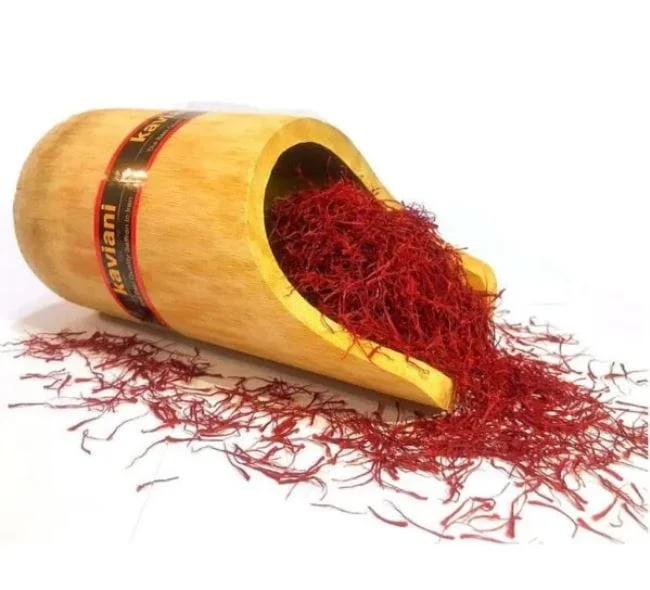
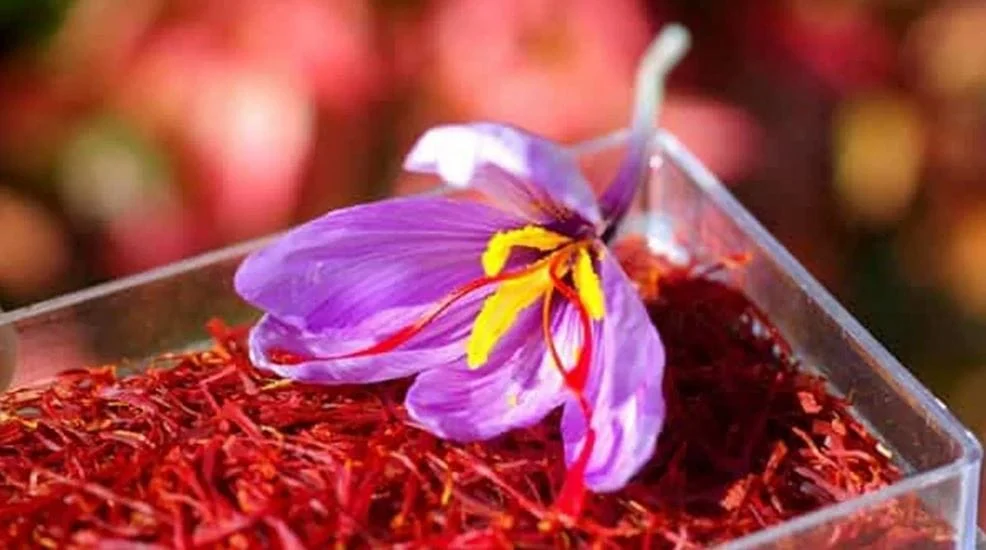
Saffron comes from Crocus sativus, a corm-forming perennial in the iris family. Each flower produces three red stigmas. These delicate threads are separated by hand and dried to make the spice. The labour involved, and the very small amount collected from each flower, help explain why genuine saffron is expensive.
The plant is propagated through corms rather than seed. If you would like a closer look at its growing cycle and flower structure, our introduction to saffron covers the crop from field to dried thread.
Why saffron has colour, flavour, and aroma
Three groups of compounds are central to saffron’s sensory character. Crocins are chiefly associated with its strong yellow-orange colour, picrocrocin with its bitter taste, and safranal with much of its aroma. An updated review of saffron phytochemistry describes these as the spice’s main characteristic compounds, while also noting that many other constituents have been identified.
Those compounds are biologically interesting, but a compound showing activity in a laboratory is not the same thing as a proven benefit in people. Human trials, their design, the product tested, and the outcome measured matter much more than a long list of possible mechanisms.
What research says about saffron health benefits
Mood and anxiety
One study described in the source article was a 12-week double-blind, randomised, placebo-controlled trial involving 60 adults with anxiety and depression. Participants received either a 50 mg saffron-stigma capsule or placebo twice a day. The researchers assessed symptoms with the Beck Depression Inventory and Beck Anxiety Inventory at the start, week six, and week twelve. Fifty-four people completed the trial, and the saffron group had greater improvements in both scores at week twelve. The full design and result are reported in the published randomised trial.
This is encouraging evidence, not a universal dosing instruction. The study was small, lasted three months, and tested a specific preparation in selected patients. It did not show that culinary saffron, tea, and every commercial capsule are equivalent.
Other small trials have compared saffron preparations with antidepressants including fluoxetine. A meta-analysis of randomised trials found a signal of benefit versus placebo and no clear difference from the antidepressants tested. That finding needs context: the evidence base contained relatively few participants, products and doses varied, and short head-to-head trials cannot establish that saffron is an interchangeable replacement for a prescribed medicine. Anyone being treated for depression or anxiety should discuss supplements with the clinician managing that care and should not stop medication on the strength of these studies.
Premenstrual symptoms
A double-blind trial enrolled women with premenstrual syndrome and compared saffron capsules with placebo for two menstrual cycles. The tested amount was 30 mg a day, divided into 15 mg morning and evening, and symptom scores improved more in the saffron group. The PMS trial record gives the intervention and study design.
A later trial studied premenstrual dysphoric disorder rather than ordinary monthly discomfort. It compared saffron, fluoxetine, and placebo over the luteal phase of two cycles. Some outcome measures favoured saffron over placebo, while another did not separate the groups clearly. These are condition-specific supplement studies, not a reason to self-treat severe pain, marked mood changes, or a suspected reproductive-health problem.
Appetite, snacking, and body weight
The source also referred to an eight-week trial in 60 healthy, mildly overweight women. It tested a branded saffron-stigma extract against placebo and reported less snacking and a greater reduction in body weight in the extract group. The study amount was 176.5 mg of extract per day, not 176.5 mg of ordinary spice added to food. Details appear in the randomised satiety study.
One small, product-specific trial does not make saffron a general weight-loss treatment. It was short, involved only women in a narrow participant group, and did not establish long-term weight maintenance. Eating saffron in rice or drinking an infusion should not be expected to reproduce a concentrated extract trial.
Crocin and brain research
Crocin is often described as the component that “protects brain cells.” That wording is too definite. Laboratory and animal studies have investigated antioxidant, anti-inflammatory, and cell-protective mechanisms, including experimental models related to neurodegenerative disease. A 2024 mechanistic review found reasons for further study but also called for better dose-response research, longer follow-up, and more well-controlled clinical trials.
In practical terms, crocin research is scientifically interesting; it is not evidence that saffron keeps the human brain “young,” prevents Parkinson’s disease, or treats an existing neurological condition.
Culinary saffron and saffron supplements are not the same
A few threads used to flavour a meal are very different from a capsule containing a defined amount of stigma powder or a concentrated, standardised extract. Clinical papers may also test different plant parts and products with different concentrations. A milligram figure from one study therefore cannot be transferred automatically to another supplement, and it should never be converted into a home recipe.
This distinction also prevents a common reading error: a study can show a change in questionnaire scores without proving that saffron treats every person with that diagnosis. Results describe the groups studied, during the follow-up period, under that protocol.
How to use saffron well in food and drink
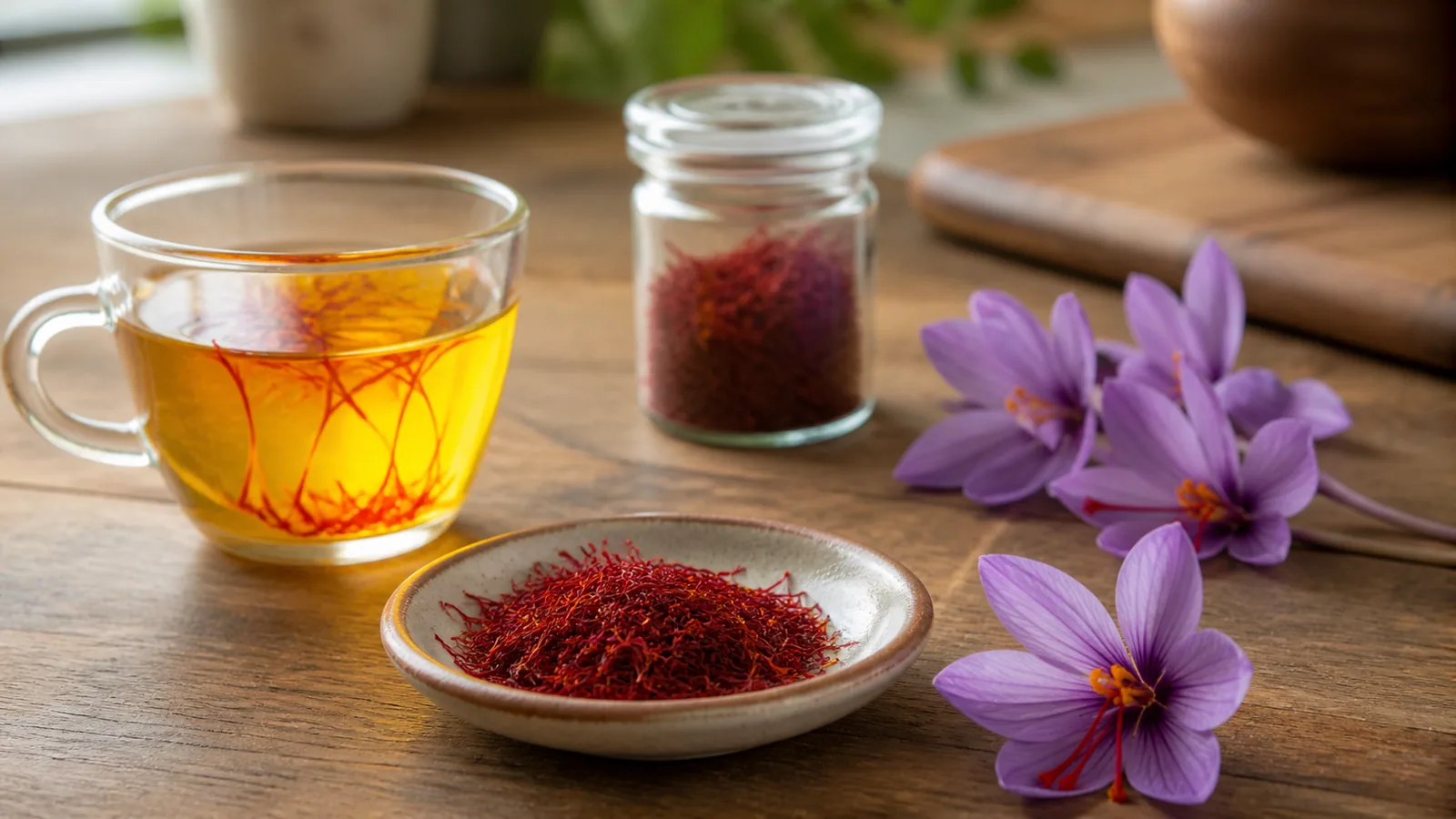
For cooking, gently crush a small pinch of threads and let them infuse in a little warm water or milk before adding the coloured liquid to the dish. This distributes the colour and aroma more evenly than dropping dry threads into a large pot. There is no need to dry saffron again at home, grind it through a sieve, or use the old article’s two-gram-per-litre “health tea” formula.
Cold blooming with an ice cube and warm infusion are both preparation techniques. Neither should be advertised as increasing saffron’s medical benefits. For a drink-focused method, see our guide to using saffron in tea.
Storage matters more than preparation tricks
Keep saffron threads in a tightly closed container, away from light, heat, moisture, and strong odours. Open the container only as long as needed and use a dry utensil. Whole threads generally make it easier to judge appearance and aroma than pre-ground spice, and grinding only the amount needed helps preserve the rest.
Sugar does not automatically ruin saffron, despite the warning in the older article. The real storage problems are exposure to air, humidity, warmth, and light. If you are deciding where to keep a sealed container, our guide to storing saffron in the fridge explains when refrigeration can create condensation risk.
Safety and sensible expectations
Normal culinary use and medicinal-dose supplementation are separate decisions. A recent systematic review of adverse events in human saffron studies found that preparations were generally well tolerated, but it also identified adverse effects—most often minor gastrointestinal problems—and called for clinical monitoring with higher medicinal doses or prolonged use.
- Do not use a blog article to diagnose or treat depression, anxiety, PMDD, or another condition.
- Ask a qualified clinician or pharmacist before taking a concentrated saffron supplement, especially during pregnancy, while using prescription medicine, or when managing an ongoing health condition.
- Do not stop, reduce, or replace prescribed treatment because a small study reported a promising result.
- Check the label carefully: “saffron,” “saffron extract,” and a branded standardised extract may not deliver the same constituents or concentration.
The useful conclusion
Saffron deserves attention as both a remarkable spice and a subject of clinical research. The strongest answer is also the most careful one: several controlled trials report promising results for particular saffron preparations and particular outcomes, especially mood and premenstrual symptoms, but the studies do not turn every saffron food, tea, or capsule into a treatment. Use genuine saffron thoughtfully in cooking, store it well, and treat supplement decisions as healthcare decisions rather than seasoning advice.

![Exporting Saffron to Turkey + Price Guide [Complete 0 to 100]](https://img.rowhanisaffron.com/20260827003933/saffron-export-turkey-quality-inspection.webp)